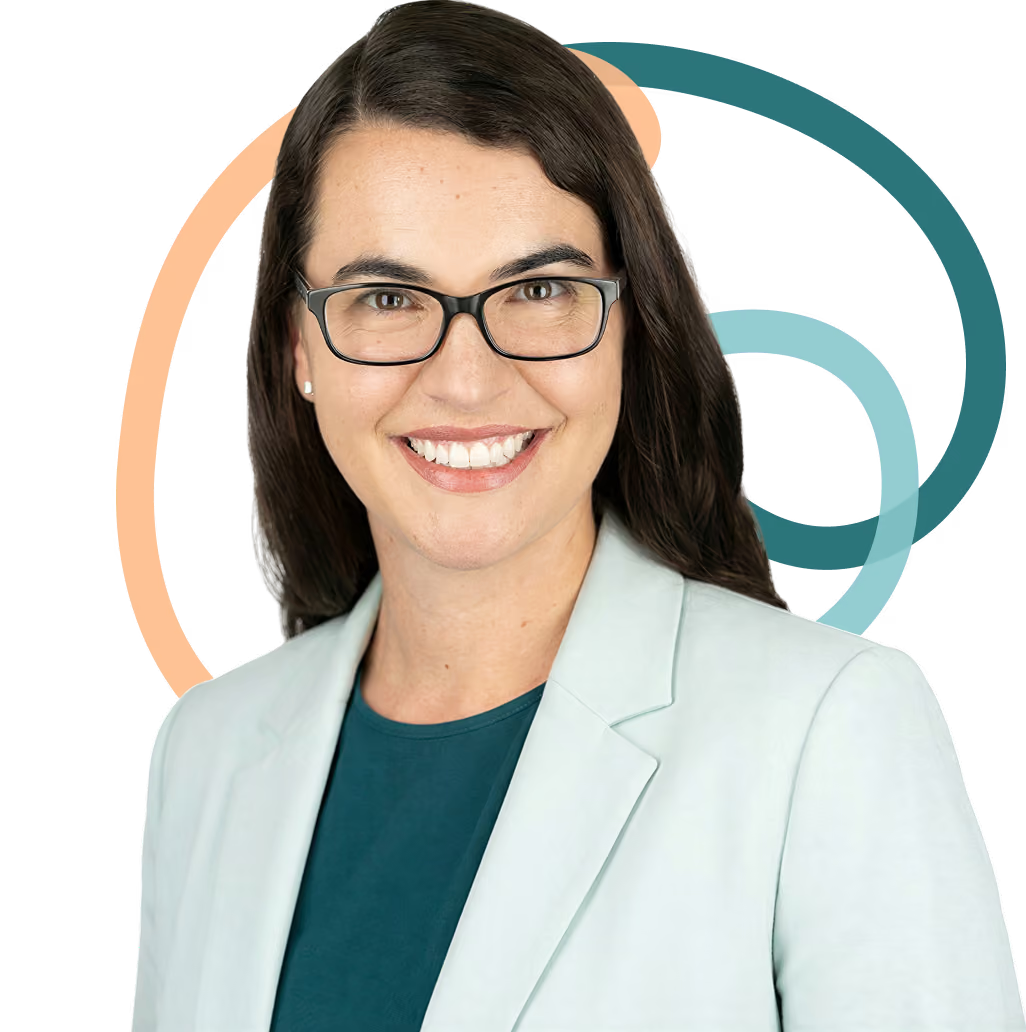
In June of 2024, I sat down with host Jana Parker of the Empower LEP Podcast to discuss my transition from working in the schools to starting My own private practice.
During the episode, I discuss the “why” behind my decision to work as an independent Licensed Educational Psychologist (LEP) and share my passion for helping families understand and navigate the school system without the red tape often encountered as a district employee. I’ve provided here a summary of the key takeaways and the full episode here as both a resource to other potential LEPs as well as to families looking to get a better sense of me and my professional experiences.
From the District to Private Practice: Erin Crawford on the Empower LEP Podcast
Leaving a stable position to build something of your own is rarely a simple decision, especially in a field as specialized as school psychology. In a recent episode of the Empower LEP Podcast, hosted by Jana Parker, Licensed Educational Psychologist Erin Crawford talked through that journey, from nearly two decades inside public school districts to launching her own private practice, Crawford Educational Psychology, in Marin County, California.
A Winding Professional Path
The conversation began where most good ones do, at the beginning. Crawford shared a bit about her background as a school psychologist working across both California and Massachusetts, and how the range of settings she practiced in shaped the clinician she is today. Those experiences spanned a wide spectrum, from working with medically fragile students to serving in well-funded suburban districts. Each setting asked something different of her, and in hindsight, that variety turned out to be ideal preparation for the breadth of cases that come through a private practice.
Why Make the Switch
A natural question, and one Crawford said she gets often, is why leave the school system at all. Her reasons were both personal and professional. On the personal side, she wanted more flexibility to be present for her own children, something the rhythm of district employment did not always allow.
Professionally, she was driven by a desire to address what she describes as the information asymmetry between school systems and families. Parents often do not have clear access to the support and explanations they need, and a great deal of that gap is created by the red tape that comes with working inside a district. Private practice gave her a way to meet families more directly and to give them better access to the answers they are looking for.
Building the Practice
Much of the discussion turned to the practical work of actually building something from the ground up.
In terms of focus, Crawford's practice currently serves a range of students. At the moment, much of that work centers on dyslexia assessments for younger children and executive functioning and ADHD support for students in middle and high school.
She was also candid about the business side. The learning curve of running a practice is steep, and she spoke openly about how important it has been to ask for help, to be patient with herself, and to push through the impostor syndrome that tends to surface when stepping into something new. None of that, she noted, is a sign of having made the wrong choice. It is simply part of the process.
On marketing and networking, Crawford shared that her approach has been relational rather than transactional. Rather than relying on cold emails, she has focused on building a local referral network the old-fashioned way, through coffees and genuine conversations with other professionals, including speech therapists and educators. Those relationships, she said, have meant far more than any mass outreach ever could.
Advice for LEPs Considering the Leap
For anyone weighing a similar move, Crawford's encouragement is to get comfortable with the uncomfortable. Lean on professional communities, she advised, because no one has to figure all of this out alone. And take the time to celebrate the wins. For Crawford, some of the most rewarding moments are the feedback sessions, when a parent finally finds clarity and relief about what their child needs. Those moments, she said, are a powerful reminder of why this work matters.
For LEPs thinking about building a practice of their own, the episode offers both reassurance and a few practical footholds for the road ahead.